
Into the Darkness
Demons, Delusions, and New Resolutions

(Forgive the extended holiday hiatus. Let’s ease back into things…)
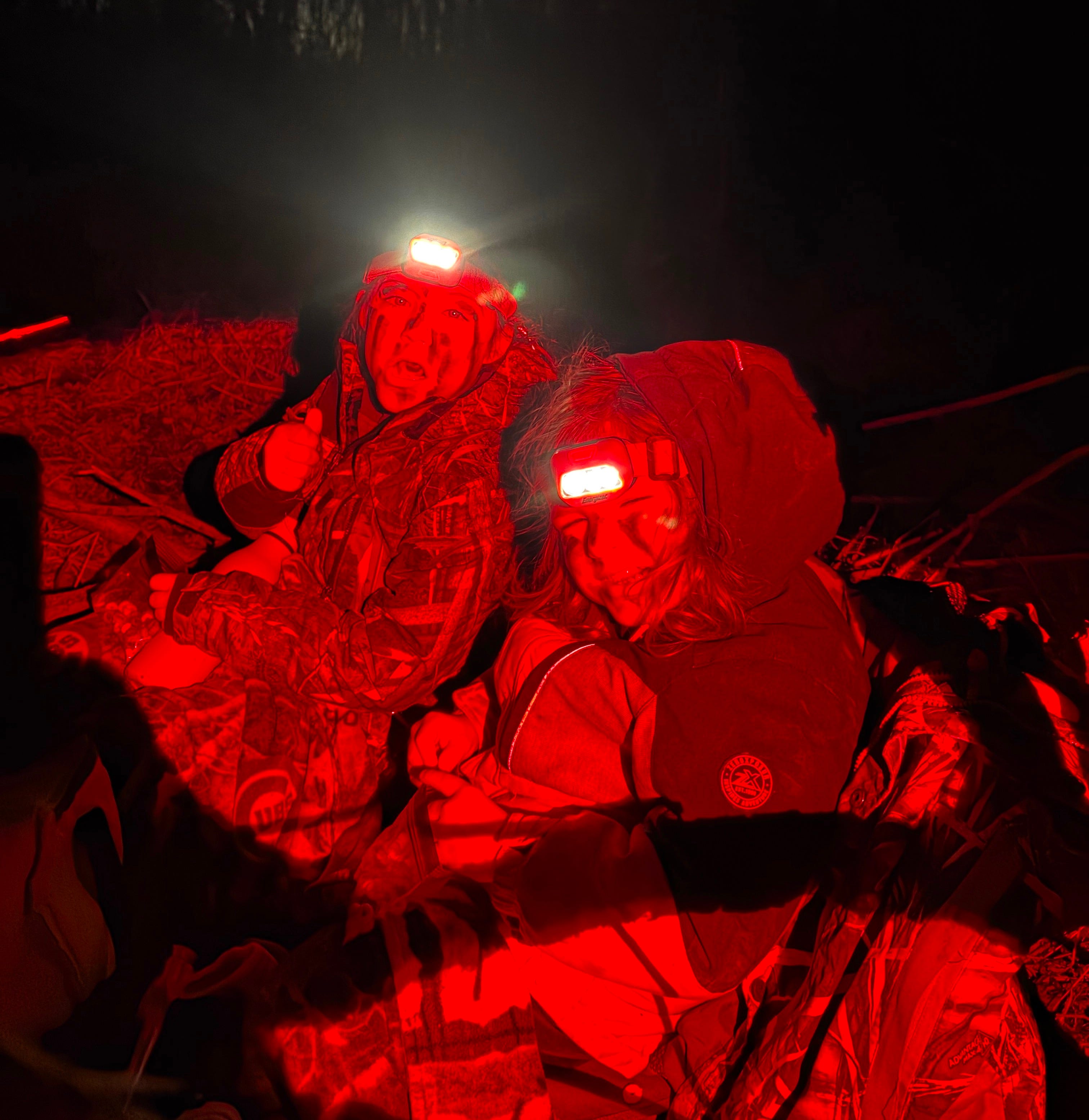
I recently took my two young boys to observe their first waterfowl hunt. On the drive there, I tried to imagine what might be going through their minds. I was doing my best to anticipate their anticipations. One thing that dawned on me was that we’d be heading into the forest long before dawn, guided by our red-tinted headlamps so as not to disrupt any wildlife or startle the sleeping ducks. I thought about how, at their age, I would have been terrified to venture into the dark forest, and I wondered whether I had prepared my sons to face that kind of fear.
As I drove down the dirt road onto state game lands, I reflected on the nature of my childhood fear of darkness. Where did that fear come from? Are humans evolutionarily wired to fear the dark as a means of self-preservation, because the dark is where unseen dangers lurk? Or is our fear built more on the stories we tell ourselves, the ways we explain the world around us? I tend to suspect it’s the latter, although it’s likely a bit of both.
For me, though, the point of this reflection isn’t to get lost in evolutionary psychology versus social conditioning. It’s to explore from where my own fear of the dark emerged. You see, I grew up in a small village in the southwest corner of Michigan. It was the kind of classic two-stoplight town that my dad would joke on long drives when passing similar communities, “Don’t blink or you’ll miss it.”
One of those stoplights stood at the downtown crossroads while the other light was near Andrews University and the local grocery store, Apple Valley. Here, the light was installed to help the flow of university traffic and boost commerce for the town’s sizable Seventh-day Adventist community. For many, Apple Valley provided the “vegemeat” staples that nourished their biblical diet. The Adventists’ predominantly vegetarian lifestyle even led to a derogatory local nickname among non-Adventist community members, who referred to them as “peanuts.”
Apart from its Adventist presence, my hometown was, for the most part, unremarkable. But that Adventist presence was significant. The town continues to serve as the international hub for the Seventh-day Adventist Church, a denomination born in the late 1800s during a wave of new Christian movements (following in the path of the evangelical revivalists, the Jehovah’s Witnesses, and the Latter-day Saints). The Adventists followed the teachings of a prophetess named Ellen G. White, whose revelations formed the basis of their doctrine. And it was within this community that I was raised, fully immersed in the Adventist way of life. I even have two Korean sisters in my family while both my half brother and I were also adopted, joining my parents’ biological three and reflecting my family’s embrace of church’s global missionary vision.
Because of the church’s missionary focus, my public high school was surprisingly diverse compared to the surrounding Midwest agricultural and tool and die towns. Lunch period felt like a mini–United Nations, with students from Ghana, Zimbabwe, South Korea, and the Philippines all sharing tables. We had an influx of students from various Eastern European countries, from Polynesian and Micronesian regions, as well as the Middle East, from South American countries like Peru, from Caribbean nations like Haiti and the Dominican Republic…all pockets of the globe.
Because of this Adventist presence, our public school cafeteria hardly ever served pork, and most meals had a vegetarian option. This was partly because there were two private Adventist schools in town largely reserved for upper middle class American families. And, many international families couldn’t afford the fees, so a lot of incoming Adventist kids attended the public school, shaping everything from the menu to the social atmosphere.
Yet, within our Adventist community, people tended to gather by nationality groupings. The main campus congregation, Pioneer Memorial Church, was attended mostly by American-born families, whereas the All Nations Church down the road attracted a more international mix, especially folks from various African countries. There was the Korean Church on the outskirts near the bypass and the Spanish-speaking church near the village center that provided headphones for English translations.
As a kid, I always hoped to get an invite from a friend to attend All Nations which happened on only a few occasions. There, time just flew. The music, the dancing, the passionate sermons all made the service feel so much shorter. The collective effervescence (as Durkheim would put it) was tangible, and church felt like its own collective organism, alive, breathing, rejoicing. In comparison, services at the more conservative Pioneer Memorial felt dry and interminable, dare I say, old-fashioned.
All of this is to say that I was a devout kid. From an early age, my life was steeped in religion and purpose. My mother had big plans for me. I was being groomed to become a pastor and eventually parlay that pastorship into a political career. The idea was that I would one day lead the country, uniting God and state by exemplifying Christian values.
So, I was inundated with scripture and Adventist devotional readings, along with a healthy dose of American patriotism in the form of nearly the entire collection of the Childhood of Famous Americans series. It was all meant to lay the foundation for this religio-political destiny. I paid close attention to every sermon and every youth group lesson. I read and re-read church texts, thinking hard about how these teachings would shape my life. I remember keeping a copy of Ellen G. White’s Steps to Christ in my elementary school locker.
In these readings, a central theme of the Adventist theology that emerged was the Apocalypse, the end of days. In this faith, Christ’s Second Coming is always imminent, just around the corner. We lived with a constant sense that we had to be spiritually ready at any moment. I remember during one revival week, a youth pastor warned us that Y2K would very likely be the end of the world. On the ride home, I asked my mom what she thought about that prediction, and she admitted it was indeed a real possibility.
This apocalyptic outlook came with vivid stories of cosmic warfare, a constant battle between good and evil, God and Satan, angels and demons. We were taught that a great spiritual war was being waged just out of sight. And through these stories of demons and the Devil, the arch-nemesis of a loving God, my childhood fear of the dark found its shape.
I became acutely afraid of the dark. I was convinced that demons could attack in the darkness and that the Devil lurked in every shadow. To me, evil and nighttime were one and the same. The darkness was especially dangerous, a time when I was particularly vulnerable to the cosmic warfare.
There were certain dark areas of our house that I absolutely dreaded: the long hallway to my parents’ bedroom, the basement stairwell, the walk out to the garage to get something from the freezer after sunset. I would sprint through those spaces so I wouldn’t have to linger, afraid that if I paused, evil might strike. I truly believed that staying too long in the shadows could open me up to demonic attacks, collateral damage from that unseen spiritual battlefield.
My fear of the dark was intense, entirely intertwined with the religious narratives I’d been taught, and was kept secret from my family for fear of embarrassment. Eventually, though, cracks appeared in the religious narrative that shaped my worldview.
It happened when I started thinking of God as “Santa Christ,” as I’ve come to call it. God was the ultimate tally-keeper, like Santa Claus and the all-seeing Eye of Providence rolled into one, constantly checking who was naughty or nice and deciding who got into heaven and who burned for eternity, the panopticon par excellence. Then I asked myself: why would such a benevolent, all-seeing being want to watch me in the bathroom?
I vividly remember that thought hitting me as I sat on the toilet one day. I actually hunched over to cover myself, wondering why God would possibly want to observe such a private moment. This anxiety followed me into the shower. I started taking lightning-fast showers just to avoid feeling “watched” for too long.
In hindsight, that was the first time I truly questioned the faith I’d been immersed in. It dawned on me that I wanted my private moments to remain private. I didn’t want to be watched in the bathroom by angels, by demons, by God, or by anyone else.
The fissure grew rapidly as I reached pre-teenage, exacerbated by witnessing my brother Peter’s plight. His struggles with mental illness had a profound impact on my understanding of what lurks in the dark, and his experiences further pushed me away from the worldview of my upbringing.
By the time I was old enough to understand what was going on, Peter had been diagnosed with schizophrenia. I always heard that before his illness he had been charismatic, fun-loving, and the kind of guy everyone adored. But the brother I knew was very different.
As his much younger sibling, I still idolized him even though I only ever caught brief glimpses of that “old” Peter during his rare moments of lucidity. At times, he would drive my brother and me in our family’s Pontiac Grand Am, blaring Tom Petty and the Heartbreakers. But, most of the time, I knew and remember him through his “manic episodes.”
During these episodes, he would claim to be a prophet of the Second Coming and describe epic battles with angels and demons, even conversations with the Devil or with figures from the Bible. If my mother contested, she would be labeled a witch. If my eldest brother dare interject, he was the Devil incarnate. Many of Peter’s struggles occurred in that hazy space between dream and reality, a boundary that was far more blurred for him than for the rest of us. And more often than not, these visions came to him at night.
When Peter shared his stories, the result was medication, hospitalization, even institutionalization. Yet in scripture, similar stories are treated as sacred. Joseph’s prophetic dreams or Job’s battle with Satan, for instance, are revered, held up as foundational tales of faith.
It confused me. Why were my brother’s experiences dismissed as mental illness while those biblical accounts were venerated as truth? That question drove me to start thinking more critically about the faith I was raised in. I began to ask uncomfortable questions, probing deeper into the beliefs I had taken for granted. Over time, that growing doubt led me to step away from the Seventh-day Adventist tradition. I had to find my own beliefs, on my own terms.
So why tell this story? Partly, I suppose, to help situate myself, to trace the roots of the questions and ideas that drive me today. Those early questions about fear, faith, and what might be hiding in the shadows have never fully left me. They’ve just evolved. I still think a lot about the legacy of missionaries and the global community I grew up in. More than that, I’m fascinated by how our lives are shaped by the unseen, by whatever lies beyond our understanding, lurking just out of sight. I’m drawn to the ways our world is transformed when we dare to step into the darkness, into the unseen.
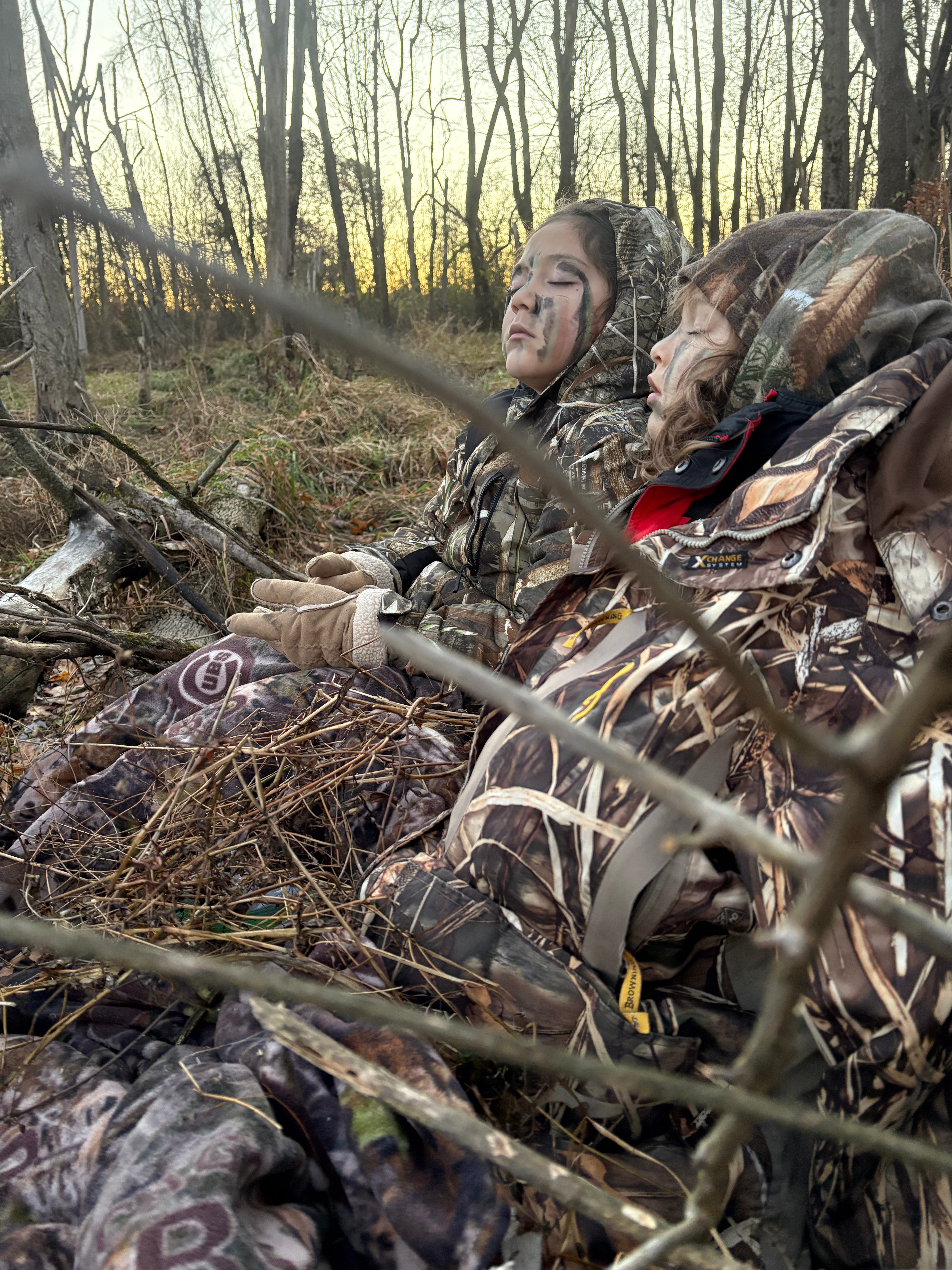
(Early mornings are tough!)