The Road Was Never Empty
A Skill Translator and a Changing Landscape

Over the life of this SubStack, I’ve introduced a handful of recurring characters, the people who, across the years, have shaped my connection to Namibia and, more than that, have shaped me. Many of them have crossed the line from interlocutor to friend, and a few have become family outright: Johanna, who took me on as a surrogate son, and her daughter Barbara, my Namibian sister. Laidlaw has walked me through the historical and commemorative sites around Swakopmund more times than either of us is counting. Chief Tjambiru, who has opened his community to me at Etanga. Each of them is a door, and through each door a little more of the country has been shown to me.
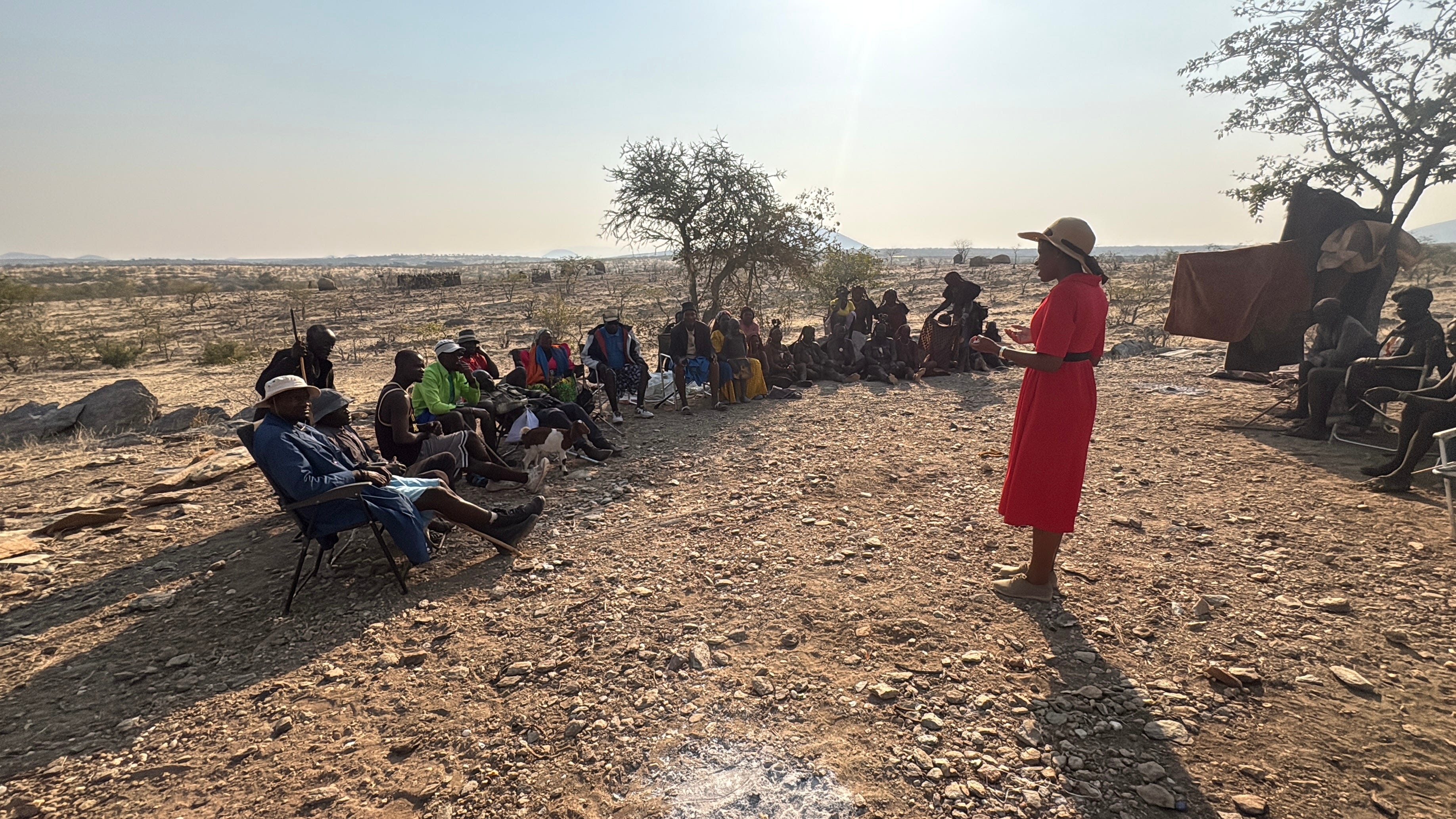
But there is one figure I’ve mentioned only in passing whose contribution, in honesty, has outweighed almost all the rest. That isn’t a slight to anyone else. It’s just the truth of the work. Without Patricia, my Otjiherero translator since 2017, this project does not exist.
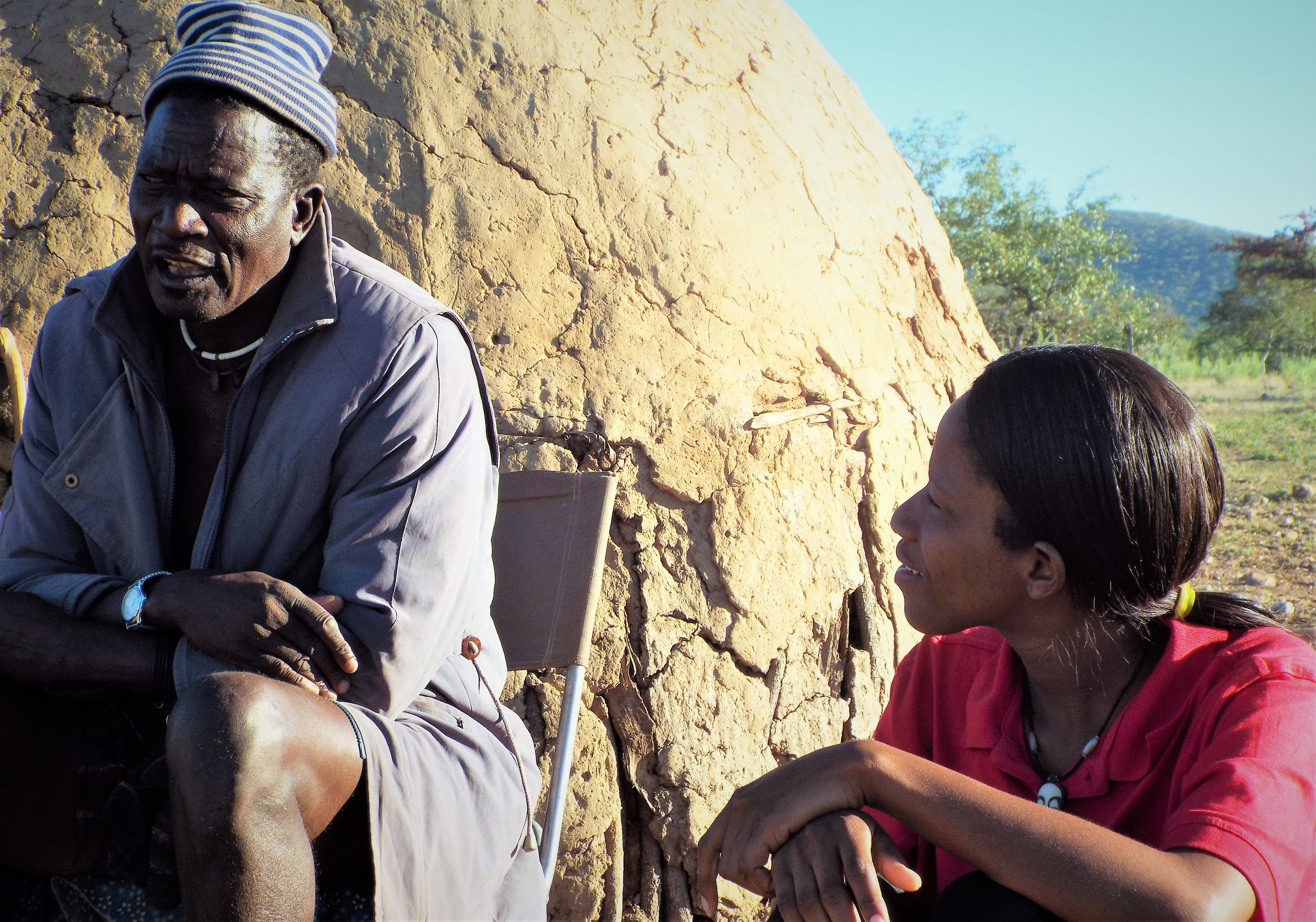
And “translator” undersells it. Yes, she carries my words across into Otjiherero and carries the answers back. But she also translates the things that have no dictionary entry: the customs, the norms, the taboos, the right and wrong ways to enter a community and ask it for its time. She catches the nuance in things I am certain I already understand and shows me the second meaning underneath. She helped set up the Namibian nonprofit and sits on its board. She is the first call I make whenever a return trip starts to take shape. On the long drives out from Opuwo to Etanga, our conversation runs from family news to the deep architecture of the project itself. She reframes my questions, turns them over, holds them up to a different light. She is not a tool of the research. She is a thinking partner in it.
And here is the thing when your shotgun partner is someone who actually reads the landscape: she sees what I drive right past.
It started, years ago, with the cell towers. Patricia pointed them out to me along the road, there, and there, and there; where there had been nothing before. The common story you hear, told in kitchens and at roadside stalls across the country, is simple: the towers are Chinese, built so that Beijing can run its fingers down into Namibia’s mineral wealth. I went looking into it, because that’s the version everyone repeats, and the truth turned out to be more tangled and, I think, more interesting.
The network itself, MTC, is Namibian. It’s majority state-owned, brought fully back under government control in 2018. So the towers aren’t Chinese property. But the “equipment” on them, the 4G, the kit behind the country’s first 5G trials, is largely Huawei’s. And the reason they’re multiplying in places like Etanga is a deliberate rural-coverage push, MTC’s long-running campaign to put a signal over every Namibian, one new tower at a time, more than a thousand of them now, built in partnership with a Chinese technology giant. So the towers aren’t Chinese-owned so much as Chinese-built. The everyday story isn’t wrong, exactly. It’s just compressed. People can feel the Chinese presence in the infrastructure even when they can’t see the ownership papers, and they’re not imagining the presence. They’re reading it correctly off the equipment and guessing at the rest.
You can watch what that signal does. When we first started going out to Etanga, a phone was useless past a certain point in the road; I think the chief was the only one with any reason to own one. Now the power lines have reached the village in the last couple of years, and the towers have followed, and, when the chief’s daughter sees my vehicle pull in, she comes ready to charge every device that’s been sitting dead for want of a socket. A place that ran on generators a few seasons ago is now, haltingly, on the grid and on the network.
Then, more recently, Patricia started pointing at the mines.
Outside Opuwo, on the way out toward Etanga, there are the camps. Local residents set up on the margins of the larger operations and work the leftovers, picking what minerals they can from the edges, only to sell them back to Chinese buyers for next to nothing. When I went to check whether this matched anything beyond what I’d been told, it did, almost exactly: reporting out of the Kunene Region describes Chinese traders in Opuwo buying ore from small-scale miners, renting the permits to move and export it, and shipping it out through Walvis Bay to China. Just south of town, a Chinese company has been sitting on a large iron-ore deposit near Orumana, with talk of a whole industrial complex. Researchers have a phrase for what’s happening up here: mining on communal land as “a new frontier,” with all the institutional tangle that the word “frontier” implies.
This is where the development story and the anxiety story turn out to be the same story. The towers and the lines are a genuine good; ask anyone in Etanga whether they’d give back the ability to call a relative or charge a phone. And at the same time, the same forces that string the cable also send the buyers, and Chief Tjambiru carries a real and reasonable worry about what lies under his community’s land and who will end up with it, working to make sure that whatever rights exist stay with his people. I’ll leave the specifics where they belong, which is unsaid. It’s enough to say the concern is there, and growing, and that it sets the stage for those grim little informal economies on the edges of the bigger operations.
I’ll add one more scene, because it has stayed with me. I was at a bar, talking with a senior, well-placed business figure who laid out the logic plainly. To do business with the Americans, he said, is always “quid pro quo”: this for that, the return expected up front, and Namibia doesn’t always have the “that” to put on the table. The Chinese, in his telling, simply “give.” The bill comes later, years later, after the roads and the towers and the networks are built, and by then, the hope is, the country has developed enough to pay it, or at least strong enough to negotiate the terms of the gift it accepted. From where he sat, that was the better deal for a young nation trying to find its footing on the global stage. I’m not endorsing his read. I’m telling you it was delivered with complete conviction by someone who would know, and that I haven’t stopped turning it over since.
Here is what Patricia has really been teaching me from her passenger seat. It would be easy, it was easy, for the younger version of me, to imagine Etanga as a place at the far end of the road, a community somehow outside the global churn, sealed off until the ethnographer arrives to find it. That was always a fiction. This community has been knotted into wider worlds for a very long time; if you’ve followed the earlier posts, you’ll remember the missionaries who walked their faith into this same ground generations ago. The connection isn’t new. What’s new is the “intensity” of it: the speed, the towers, the buyers, the cable, the new shapes that globalization takes when it reaches a village by dirt road.
Patricia is the one who keeps pointing at it, season after season, so that I don’t mistake the quiet of the drive for emptiness. She reads the country to me the whole way out. The least I can do is write down what she sees.